
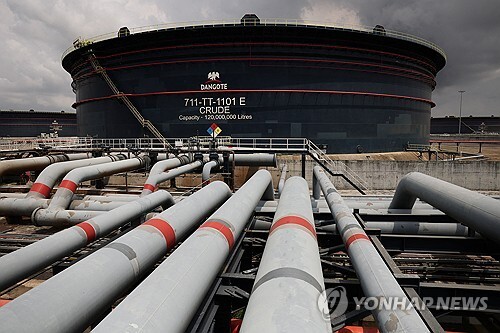
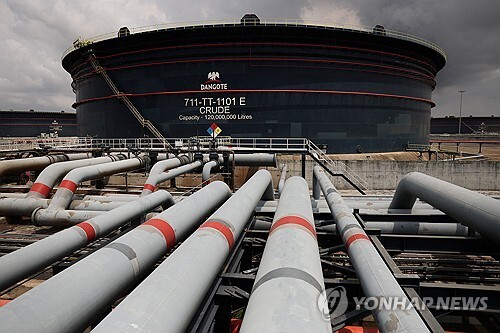
 ▲ Dangote’s crude oil storage tanks in Lagos, Nigeria |
International oil prices, which had surged nearly 25% on fears of war, plunged on news that the Group of Seven (G7) nations were discussing the emergency release of strategic reserves, helping stabilize the market and triggering a dramatic rebound rally in flagship cryptocurrency Bitcoin (BTC), which had been under heavy pressure.
According to investment media outlet FXStreet on March 9 (local time), the Financial Times reported that G7 finance ministers planned an emergency call to discuss a coordinated release of 300 million to 400 million barrels of strategic petroleum reserves to calm the surge in oil prices caused by the war.
Following the news, crude oil futures on decentralized derivatives exchange Hyperliquid, which had jumped about 25% overnight to around $117, immediately plunged 14.5% to retreat to the $100 level. This reflected traders rapidly pricing in the risk of active policy intervention by major countries despite supply threats stemming from armed conflict.
Bitcoin, which had tumbled to $65,725 amid the oil shock, quickly recovered losses alongside falling oil prices, rebounding 3.45% to $67,992.88. However, CryptoQuant analyst Darkfost warned that continued tensions in the Strait of Hormuz and persistently high oil prices could dampen investor appetite for risk assets, noting that historically, strong oil markets have tended to coincide with the latter stages of Bitcoin cycles.
The latest oil shock became a catalyst for massive liquidity flowing into on-chain exchanges over the weekend when traditional financial markets were closed. Following U.S. and Israeli strikes on Iran in late February, demand for oil-linked contracts on Hyperliquid surged. As a result, Tradexyz, the trading interface built on the platform, surpassed $720 million in weekend trading volume, easily exceeding the previous record of $610 million and setting a new all-time high.
On-chain analytics firm Pine Analytics evaluated the surge in weekend trading volume as clear evidence that decentralized platforms are successfully absorbing explosive market demand for traditional assets when access to conventional finance is unavailable or when traditional exchanges are offline.
Disclaimer: This article is for investment reference only, and we are not responsible for any investment losses incurred based on it. The content should be interpreted solely for informational purposes.

답글 남기기